Wednesday, March 2, 2011


Saturday, January 8, 2011
The Student As Historian - DBQ Strategies and Resources
Check out this presentation by Peter Pappas, recently featured on SlideShare. Many of you worked with Peter at his fall presentation. This SlideShade a great review, full of ideas, resources, and links for engaging student thinking. Enjoy.
Monday, December 13, 2010
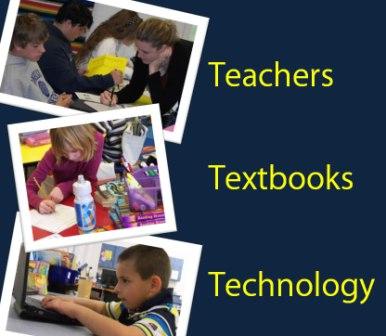
Teachers Textbooks Technology
Sunday, December 5, 2010
How lovely are your branches!

"Necessitie, the inventour of all goodnesse."
Toxophilus, 1545
"Neccesity is the Mother of Invention."
Richard Franck, 1658
Not much time.
Not many materials.
And we're responsible for decorating a huge evergreen for the 1st Annual Union Township Civic Center's Tree Lighting! Yikes!
Actually, there's no need for alarm. With the West Clermont Art Department, these kinds of situations are everyday fare. When the clock is rapidly ticking and supplies are in short supply, our talented art teachers take the reins.
In record time, West Clermont K-12 art students created festive, colorful, large-scale weatherproof ornaments. Hundreds of kids. Hundreds of decorations. We did it up on a grand scale!
And the 1st annual tree lighting was a success. Hot chocolate, cookies and carols added to the cold, clear night. But the tree took center stage, and her branches were indeed, very lovely.
Tuesday, November 9, 2010
Quality PD on A Shoestring

Thanks to the Board members and school administrators who joined us for a demonstration and conversation about low-cost, no-cost web applications to help create quality professional learning. As promised, here is your "paperless" handout:
Voicethread: Share images & text, collaborate & comment
Ning: Share within a members-only network
Bonus: See also Jing for easy screen capture capability
Click here for November 9 PPT slides.
Click here for November 9 handout.
Presented to the Ohio School Boards Association Capital Conference, November 9, 2010
West Clermont Local Schools Department of Teaching & Learning
4350 Aicholtz Road Cincinnati OH 45245 | 513.943.5017
M.E. Steele-Pierce PhD Assistant Superintendent skype: steelepierce1
Cheryl Turner MEd Instructional Supervisor skype: cturnerr
Tanny McGregor MEd Instructional Supervisor skype: tanny744
Sunday, October 31, 2010

Saturday, October 9, 2010
edcamp Cincy
W-T Elementary School was the host site of Greater Cincinnati's first edcamp, Saturday, October 9.
Learn about edcamps here.
Learn about edcamp Cincy here.
Follow the updated edcamp Cincy wiki here.
More photos and interviews here.
Sixty educators from around the Greater Cincinnati region gathered to create their own personal learning agendas and networking conversations. West Clermont participants included Julie Schneider, Tammy Marcotte, Cheryl Koehler, Kathy Stemmer, Joan Stear, Jeff Riel, Kendra Herdtner, LeAnna Webber, Joe Stahl, Alicia Walls, Scott Morgan, Matt White, Cheryl Turner and M.E. Steele-Pierce. Ask them about the day!
Sunday, October 3, 2010
A (Brief) History of Learning: How Do You Learn?
At last Friday's kick off of Powerful Learning Practice, Will Richardson asked the 75 educators in the room, "How do you learn?" He challenged us that no conversation about educational reform can begin unless the focus is on LEARNING. He challenged us to consider our own learning systems and styles.
This morning I ran across this Prezi with commentary by Dallas McPheeters, entitled, "A 5000 Year Timeline of Learning Theories" (don't worry, it's 5000 years in 13 minutes). It begins and ends with the question, "How do you learn?"
5000 Year Timeline of Learning Theories from Dallas McPheeters on Vimeo.
One other thing, you'll find this Prezi and many, many other resources, videos, topics, and conversations on The Educator's PLN. It's a wonderful site for those of you building your own personal learning network. If you haven't toured it yet, please do. I invite you to join the conversation, or just lurk and learn for a while.
M.E.
PS And thank you to Tom Whitby, a member of my PLN, for posting the tweet that led me to the video.
This morning I ran across this Prezi with commentary by Dallas McPheeters, entitled, "A 5000 Year Timeline of Learning Theories" (don't worry, it's 5000 years in 13 minutes). It begins and ends with the question, "How do you learn?"
5000 Year Timeline of Learning Theories from Dallas McPheeters on Vimeo.
One other thing, you'll find this Prezi and many, many other resources, videos, topics, and conversations on The Educator's PLN. It's a wonderful site for those of you building your own personal learning network. If you haven't toured it yet, please do. I invite you to join the conversation, or just lurk and learn for a while.
M.E.
PS And thank you to Tom Whitby, a member of my PLN, for posting the tweet that led me to the video.
Wednesday, September 29, 2010
Tech Tapas

On the menu board (all FREE or very low cost)
Delicious: share you bookmarks, browse others by friend or topic
Voicethread: interactive way to teach with images and audio
Wallwisher: collect feedback
Jing: capture whatever's on your screen
Skype: use free audio and video conferencing
Twitter: microblog (keepin' it concise) to learn, share, network
Ning: network securely and share resources
Google Docs: collaborate on all kinds of documents
Bit.ly: shorten those long URLs
Blogspot: blog from an easy-to-us template
Animoto: create video from your images
Buen Provecho!
Thursday, September 23, 2010
21C Skills for the Arts: Customizing to Our Circumstances
"If you're doing a thing that you're passionate about, time takes a different turn entirely," said Sir Ken Robinson in his 2010 TED Talk. We'll begin our K-8 Fine Arts professional learning day with Robinson's talk, "Bring on the Learning Revolution!"
Robinson urges us to examine what we take for granted and to consider what we need to leave behind to teach and learn in a new century. He invites us to change our metaphor of education from an industrial model (one size for all) to an agricultural one (organic and adapting). He goes on to talk about customizing to our circumstances, quoting Lincoln: "Let us not rise to the occasion. Rather, let us rise with the occasion."
Rising with the occasion, our K-5 Fine Arts teachers began their 21C Skills conversation* on our September 1 professional learning day. We used the Skills Map for the Arts created by P21, Partnership for 21st Century Skills. We'll be joined September 24 by our middle school arts teachers as we continue our exploration.

As we gather again on Friday we will focus on two of Robinson's themes: sharing our talents and collaborating on lessons that customize to our circumstances.
We'll enjoy the morning with our teacher showcase—sharing our diversity of talent. On deck so far: Tim Kloth will debut his newly completed composition, Mark Messerly will play a piece from his Thursday night gig at Grammers, Jennifer Witsken will share her pattern designs for knitting, and Pam Hall will show her favorite jewelry creations.
Then we'll follow Robinson's second charge—to customize to our circumstances. We'll play, experiment, innovate, and adapt to redesign a current lesson plan or unit, customizing with two or more 21C Skills:
________________________________
*About 21C Skills and our September 1 Arts conversation, what's the word? See for yourself:

Robinson urges us to examine what we take for granted and to consider what we need to leave behind to teach and learn in a new century. He invites us to change our metaphor of education from an industrial model (one size for all) to an agricultural one (organic and adapting). He goes on to talk about customizing to our circumstances, quoting Lincoln: "Let us not rise to the occasion. Rather, let us rise with the occasion."
Rising with the occasion, our K-5 Fine Arts teachers began their 21C Skills conversation* on our September 1 professional learning day. We used the Skills Map for the Arts created by P21, Partnership for 21st Century Skills. We'll be joined September 24 by our middle school arts teachers as we continue our exploration.

As we gather again on Friday we will focus on two of Robinson's themes: sharing our talents and collaborating on lessons that customize to our circumstances.
We'll enjoy the morning with our teacher showcase—sharing our diversity of talent. On deck so far: Tim Kloth will debut his newly completed composition, Mark Messerly will play a piece from his Thursday night gig at Grammers, Jennifer Witsken will share her pattern designs for knitting, and Pam Hall will show her favorite jewelry creations.
Then we'll follow Robinson's second charge—to customize to our circumstances. We'll play, experiment, innovate, and adapt to redesign a current lesson plan or unit, customizing with two or more 21C Skills:
- Critical Thinking and Problem Solving
- Communication
- Collaboration
- Creativity
- Innovation
- Information Literacy
- Media Literacy
- Information, Communications, and Technology Literacy
- Flexibility and Adaptability
- Initiative and Self-Direction
- Social and Cross-Cultural Skills
- Productivity and Accountability
- Leadership and Responsibility
________________________________
*About 21C Skills and our September 1 Arts conversation, what's the word? See for yourself:

Tuesday, September 21, 2010
Not Your Granny's Open House
Amelia Middle School's 7th and 8th grade open house let parents meets their students' teachers and their classrooms' technology tools. Parents got a chance to sign in on interactive white boards and practice texting responses to teachers' questions. Classes across the district and across the country adapt to 21st Century teaching and learning. Take a look!


Wednesday, August 18, 2010
Class of 2014: No Wristwatches, No Email

Yearly since 1998 two profs at Beloit College, Wisconsin, have created a Mindset List to help faculty better understand the incoming class. For those of us talking 21st Century Skills, this list is a powerful reminder.
Meet the CLASS of 2014, for whom...
1. Few in the class write in cursive.
2. Email is just too slow, and they seldom (if ever) use snail mail.
3. Buffy has always been a vampire slayer at Hemery High.
4. “Venti half-caf vanilla latte” has always been lingo.
5. Clint Eastwood is known as a director, not as Dirty Harry.
6. DNA fingerprinting and human genome maps have always existed.
7. Korean cars have always been a staple on American highways.
8. Their first computer's an Apple II. It’s now in a museum.
9. Czechoslovakia never existed.
10. Second-hand smoke has always been an official carcinogen.
11. Bud Selig has always been the Commissioner of MLB.
12. Russians & Americans have always lived together in space.
13. Food’s always been irradiated.
14. Fergie is a pop singer, not a princess.
15. Nirvana is on the classic oldies station.
16. Rock bands have always played at presidential inaugural parties.
17. Michelangelo was just a computer virus.
18. Beethoven has always been a dog.
19. With cell phones to tell time, there’s no need for a wrist watch.
Source: Beloit College 2014 Mindset List. See the complete list here.
Image by Simon Peckham Flickr Creative Commons
Thursday, August 5, 2010
The Writing is on the Screen

"The writing is on the screen" author Bill Kist reminds us about the new media age as he invites teachers to use Web 2.0 and social media technologies to reach 21st Century kids. Kist, author of The Socially Networked Classroom: Teaching in the New Media Age (2009), will join West Clermont for two interactive workshops Tuesday, August 17. Location: Union Township Civic Center, Cincinnati, OH.
For teachers 5-12: 8:30 to 11:30 am: Teaching in the socially networked classroom.
For administrators: 12:30 to 3:30 pm: The new literacies: 21st century skills in our classrooms.
To learn more about Kist's book, see this great glogster review by Kevin Hodgson.
For information about registration: steele_m@westcler.org.
Thursday, July 29, 2010
Did You Know? 4.0
Many of us have seen the original Did You Know video by Karl Fisch and Scott McLeod. This is the most recent version, updated in September 2009. I'm looking forward to the 2010 data, but still find this a powerful reminder as we enter a new school year. As adults, we can choose whether or not to use technology. Our children will not have that option. So our district's and schools' improvement plans this year include 21st Century Skills, for students and for staff. In the next month before our students return what new skills and technologies can we explore, try out, or just play with, to move us towards a 21st Century teaching & learning experience?
M.E.
PS For me, I'm learning Prezi this summer, reading Drive by Daniel Pink, and taking part in an online book study.
M.E.
PS For me, I'm learning Prezi this summer, reading Drive by Daniel Pink, and taking part in an online book study.
Thursday, July 22, 2010
On Track for Graduation
This guest blog post was written by Dennis Ashworth, who retired as Glen Este High School principal July 2010. It was inspired by the Cincinnati Enquirer's questions on preventing high school drop outs.
________________________
West Clermont School District has developed intervention programs aimed at increasing our student graduation rate, and deterring teens from dropping out of school. Research shows that the two most critical years for high school students are the 9th and 10th grades. If students have little success and fall behind in those early years, the drop out rate increases dramatically.
Amelia and Glen Este High Schools have programs in place designed to help 9th and 10th grade students stay on track for graduation. We also have programs for juniors and seniors who need extra support during their last years of school.
9th Grade Transition Teams:
Each high school creates incoming 9th grade students' schedules so they are with a team of teachers each day. Transition team teachers develop a common academic plan, and they meet once a week to discuss student progress. The school day is designed to allow each student a sense of structure: what their day will look like, goals, objectives, activities, and expectations. Students get a sense of what to expect each day to organize and prepare for their daily routine. Each 9th grade student is given a Reading Comprehension Assessment and a Learning Style Inventory. Beginning in the fall of 2010, each 9th grader will take the PLAN test from ACT©. Each of these assessments allows the team to generate lessons, activities and assessments that best fit each student. Teachers get to know their students and have an increased opportunity for communication with parents. During parent-teacher conferences the parent can meet with the entire team and get a better picture of how their student works though out the entire day.
10th Grade Level Teams:
These teams operate on the same principle as the 9th grade teams but are designed to help students begin to use the skills from their 9th grade year as a basis for independent work, self motivation, and increased expectations. The Ohio curriculum is standards-based and is developed to give each student the best opportunity to pass the OGT (Ohio Graduation Test) on their first attempt.
Virtual School:
West Clermont has developed a Virtual School Program open to juniors and seniors who have credit deficiencies and are in danger of not graduating, or not graduating with their class. This on-campus program allows students to complete course work using an online high school program approved by the Ohio Department of Education. Students can access their courses both at school and at home which allows them to complete their needed credit requirements. This helps students catch up without overloading them with additional classes in their schedule. It gives them immediate feedback about their progress and allows them the opportunity to work at their own pace. Admittance policies for the Virtual School are stringent and students must maintain specific academic goals to remain in the program. An additional student benefit: the program operates through the summer allowing students to continue the path towards graduation.
Credit Recovery Program:
Credit Recovery operates in the same way as the Virtual Program but is designed for students who need only a few credits. Students maintain their regular daily schedules but have the opportunity to be placed in online courses that they have previously failed. Each student reports to the credit recovery site on campus one hour a day to work, plus they can access the class from home. Both semester work and yearlong work can be recovered this way.
OGT Intervention:
All 11th and 12th graders who have not passed the OGT are placed in OGT Intervention sessions. Students are given specific help in the content area that they must pass on the OGT, with practice tests and online access for additional support. West Clermont also offers Summer OGT Intervention for upperclass students who want to retake the test in July.
All Students:
All high school students have access to several intervention/support programs. West Clermont has developed an active study table program that operates after school three days a week. This 90-minute help session is opened to all students and has teacher support in all core areas. We also offer after school tutoring for any core subject area.
Our goal is to make sure that each student progresses in a way that allows them the opportunity to graduate with their class. Waiting until the senior year does not help the student, the parents, the community, or the district.
________________________
West Clermont School District has developed intervention programs aimed at increasing our student graduation rate, and deterring teens from dropping out of school. Research shows that the two most critical years for high school students are the 9th and 10th grades. If students have little success and fall behind in those early years, the drop out rate increases dramatically.
Amelia and Glen Este High Schools have programs in place designed to help 9th and 10th grade students stay on track for graduation. We also have programs for juniors and seniors who need extra support during their last years of school.
9th Grade Transition Teams:
Each high school creates incoming 9th grade students' schedules so they are with a team of teachers each day. Transition team teachers develop a common academic plan, and they meet once a week to discuss student progress. The school day is designed to allow each student a sense of structure: what their day will look like, goals, objectives, activities, and expectations. Students get a sense of what to expect each day to organize and prepare for their daily routine. Each 9th grade student is given a Reading Comprehension Assessment and a Learning Style Inventory. Beginning in the fall of 2010, each 9th grader will take the PLAN test from ACT©. Each of these assessments allows the team to generate lessons, activities and assessments that best fit each student. Teachers get to know their students and have an increased opportunity for communication with parents. During parent-teacher conferences the parent can meet with the entire team and get a better picture of how their student works though out the entire day.
10th Grade Level Teams:
These teams operate on the same principle as the 9th grade teams but are designed to help students begin to use the skills from their 9th grade year as a basis for independent work, self motivation, and increased expectations. The Ohio curriculum is standards-based and is developed to give each student the best opportunity to pass the OGT (Ohio Graduation Test) on their first attempt.
Virtual School:
West Clermont has developed a Virtual School Program open to juniors and seniors who have credit deficiencies and are in danger of not graduating, or not graduating with their class. This on-campus program allows students to complete course work using an online high school program approved by the Ohio Department of Education. Students can access their courses both at school and at home which allows them to complete their needed credit requirements. This helps students catch up without overloading them with additional classes in their schedule. It gives them immediate feedback about their progress and allows them the opportunity to work at their own pace. Admittance policies for the Virtual School are stringent and students must maintain specific academic goals to remain in the program. An additional student benefit: the program operates through the summer allowing students to continue the path towards graduation.
Credit Recovery Program:
Credit Recovery operates in the same way as the Virtual Program but is designed for students who need only a few credits. Students maintain their regular daily schedules but have the opportunity to be placed in online courses that they have previously failed. Each student reports to the credit recovery site on campus one hour a day to work, plus they can access the class from home. Both semester work and yearlong work can be recovered this way.
OGT Intervention:
All 11th and 12th graders who have not passed the OGT are placed in OGT Intervention sessions. Students are given specific help in the content area that they must pass on the OGT, with practice tests and online access for additional support. West Clermont also offers Summer OGT Intervention for upperclass students who want to retake the test in July.
All Students:
All high school students have access to several intervention/support programs. West Clermont has developed an active study table program that operates after school three days a week. This 90-minute help session is opened to all students and has teacher support in all core areas. We also offer after school tutoring for any core subject area.
Our goal is to make sure that each student progresses in a way that allows them the opportunity to graduate with their class. Waiting until the senior year does not help the student, the parents, the community, or the district.
Wednesday, June 23, 2010
Teaching in the New Media Age

Mark your calendar! William Kist, author of The Socially Networked Classroom: Teaching in the New Media Age and The New Literacies, will join West Clermont for two workshops for teachers and administrators. Join us August 17 at the Union Township Civic Center, Cincinnati.
For teachers 5-12: 8:30 to 11:30 am: Teaching in the socially networked classroom.
For administrators: 12:30 to 3:30 pm: The new literacies: 21st century skills in our classrooms.
For information: steele_m@westcler.org
Tuesday, June 22, 2010
Leadership is Teaching

Leadership is Teaching
I love my work.
Last week, Jeff Goldstein (@doctorjeff) posted this provocative tweet: “Shouldn't it be joyful employment? Shouldn't that be THE goal?” As I recall, he was talking about the goal of schooling.
But I was stunned by the juxtaposition of those two words: joyful employment.
And it got me to thinking about why on earth I love working as a district administrator. After all, change is messy. You can’t please everyone. Bureaucracy abounds. There are no summers off. Nonetheless.
I get to teach. Every single day.
I remember when I first read James McGregor Burns definitive work Leadership. “Leaders shape and alter and elevate the motives and values and goals of followers through the vital teaching role of leadership,” he claimed. I leaned forward in my chair. Yes! I thought. This is exactly what I love about my work.
A decade ago I had the opportunity to work with coaches from the Change Leadership Group (CLG) at Harvard. Our district was a beta site for the CLG’s early work in building capacity in school leadership teams to move from school re-formation to school trans-formation.
I was fascinated to watch our CLG leaders at work. Their leadership reminded me of how I thought good teaching looked. Whenever I practiced what I they preached, it always felt like doing my best teaching. Eventually, this led me to formal research—and lots of informal observations—of good teaching and good leading. Really, they’re much the same, aren’t they?
So as long as I get to teach (almost) every single day, that’s joyful employment.
Like good teachers, good leaders:
Build trust
Form community
Clarify expectations
Break tasks into manageable chunks
Promote dialogue
Ask provocative questions
Good teachers and leaders use processes that help others to consider, connect, and reshape their thinking. They’re change agents. Simply put, they help us change our minds.
Saturday, June 5, 2010
R & R

Relax and recharge: now that's the kind of R & R I'm looking for. And you need it, too. But don't take it from me...
Ingrid Bergman: "The best way to keep going is to keep going at whatever it is that keeps you going. With me, that's work, and a lot of it. And when a job is finished, relax and have fun!"
Ovid: "Take rest. A field that has rested gives a bountiful crop. What is without periods of rest will not endure."
Ernest Hemingway: "I still need more rest in order to work at my best. My health is the main capital I have and I want to administer it dilligently."
Karen Brademeyer: "Who among us hasn't envied a cat's ability to ignore the cares of daily life and to relax completely?"
Leonardo DaVinci : "Every now and then go away, have a little relaxation, for when you come back to your work your judgment will be surer. Go some distance away because then the work appears smaller and more of it can be taken in at a glance and a lack of harmony and proportion is more readily seen."
Zzzzzzzzzzzzzzzzzzzz,
Tanny
Monday, May 31, 2010
In Remembrance: Memorial Day 2010

Again, I would like to welcome the Willowville community to the 33rd Annual Memorial Day Parade as we celebrate and honor all men and women who have fought for and defended our great nation. This day of celebration is for you!
Since the first official observance 1868, when it was called Decoration Day, it has been a day of remembrance; a time to honor, respect, and thank those who fought to protect our freedom.
The American flag is a symbol of freedom that we celebrate and hold sacred. Let it also remind each of us of the sacrifices made by men and women throughout our nation. Too often we fail to remember those who gave their life or those whose life today bears scars as a lasting memory of that sacrifice and commitment. There are many who remember vividly as the lives affected were sons, daughters, parents, aunts, uncles, friends, coworkers, and neighbors.
As educators, we have a responsibility to educate these young minds about the sacrifice others have made so that they may live in this outstanding country. So to all of those who fought, we owe them the honor of our respect for delivering to us liberty upon nothing less than the commitment of their life and the willingness to lose it for our freedom. Friends ~ Freedom is not free ~ let us never forget!
For 33 years Willowville families have gathered and paused to reflect on just what has been given and sacrificed so that freedom could ring across this great land. To all the veterans sitting here today and those who have given the ultimate sacrifice ~ this celebration and day of remembrance is for you!
Michelle Kennedy
Principal


Monday, May 24, 2010
Undercover Readers: RTRW 2010

In the Teaching & Learning Community, we celebrate reading 365 days a year. It's so nice, though, to have an official week of festivities that gives reading the honor it deserves. After all, reading gives us knowledge, pleasure and escape anytime, anywhere. And compared to the cost of other entertainment, it costs next to nothing!
The twelve schools in our district observed Right to Read Week in a wide variety of ways, with varying themes. Activities included everything from reading parades to crazy contests to book fairs. Students and teachers read together each day, responding to the reading in book clubs, nings and at evening events.

Our schools have celebrated Right to Read Week for decades, but this year our district office decided to join in on the fun. We work together each day, know a lot about each others families and interests. But we don't necessarily know each other as readers. We captured images of our favorite books, tucked away our photographs underneath, and created an interactive hallway display entitled, "Undercover Readers". Here's the district office custodian, Edith. She loves Gone With The Wind, but we didn't know it until now!

Next year promises to be bigger and better. Our community of readers will have read millions more words, turned thousands more pages, and scanned as many screens of text. We're all thankful for the right to read!
Tanny
Subscribe to:
Posts (Atom)


